
Overview – A voltage spike in an industrial facility doesn’t announce itself. One moment equipment is running normally; the next a motor controller is damaged or a CNC machine has tripped. The cost of that failure in downtime and repairs usually far exceeds the cost of the protection that could have prevented it. A step down transformer is a core part of how industrial facilities manage voltage and protect equipment from an unstable supply.
Introduction
Industrial facilities deal with voltage problems more regularly than most people outside the electrical field realize. Motors switching on and off, variable frequency drives running, inductive loads creating transients – these are everyday events in a manufacturing environment, and every one of them has the potential to disrupt the voltage reaching sensitive equipment. A Step Down Transformer sits between the incoming supply and the load, managing that voltage before it reaches anything critical.
How a Step Down Transformer Works?
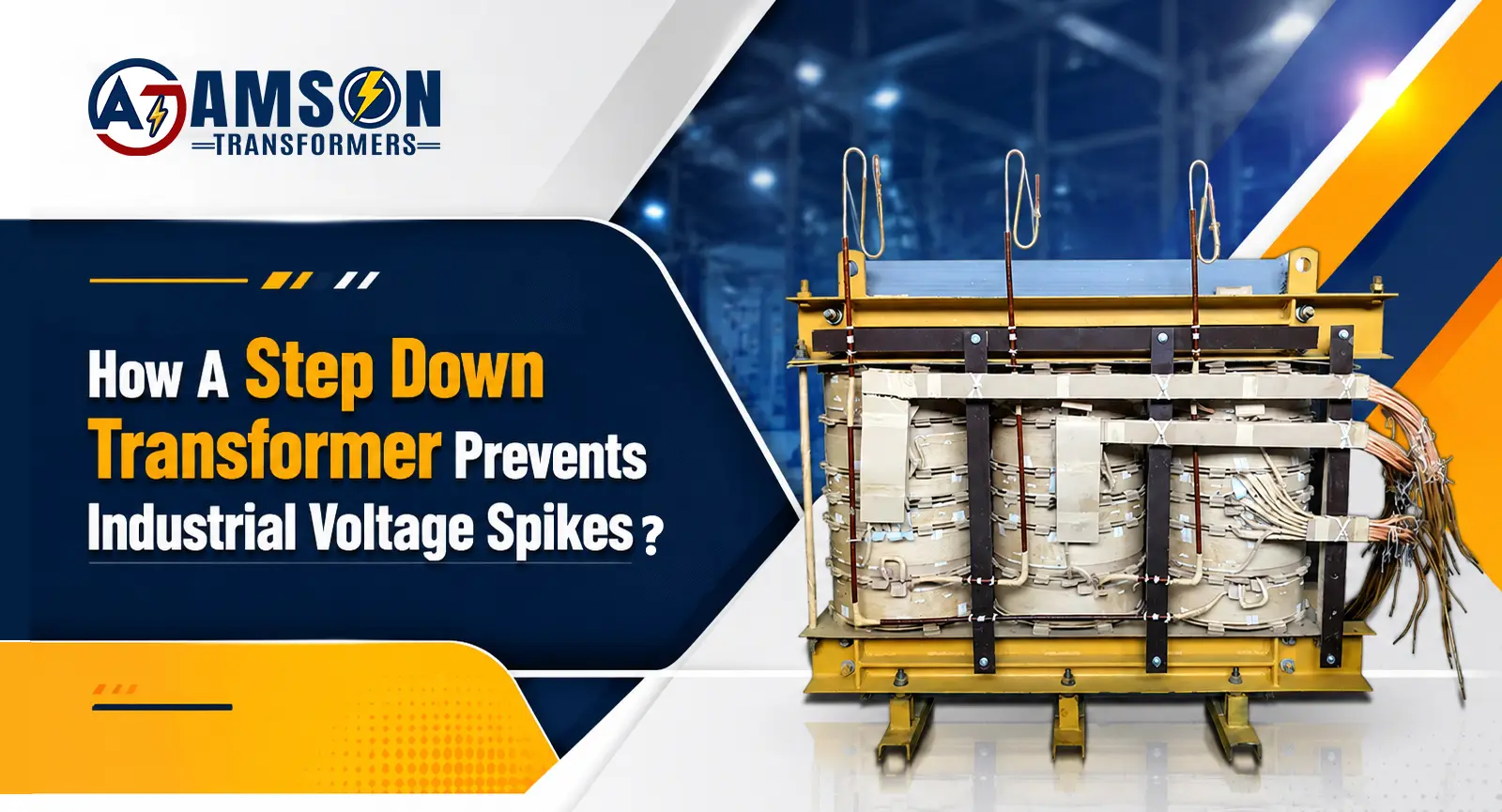
A step down transformer converts high-voltage, low-current power into low-voltage, high-current power through electromagnetic induction. The primary coil receives AC current, creating a fluctuating magnetic field. That field activates the secondary coil, which delivers the output voltage. The ratio of turns between the two coils determines the voltage reduction.
Key construction features that affect performance:
- Copper or aluminium windings – copper gives better conductivity and efficiency
- Laminated core to reduce energy losses
- Modern units achieve efficiency ratings exceeding 98%
What Voltage Spikes Are and Where They Come From?
A voltage spike is a brief, sudden increase above the normal operating level. In industrial environments they come from:
- Large motors and compressors switching on and off
- Variable frequency drives generating harmonics and switching transients
- Lightning strikes on the supply network
- Load switching elsewhere in the facility affecting supply voltage
The problem is that sensitive industrial equipment – PLCs, CNC controllers, servo drives, and instrumentation – is rated for a specific voltage range. A spike above that range stresses insulation, degrades components over time, and in severe cases causes immediate failure.
How a Step Down Transformer Manages Voltage?
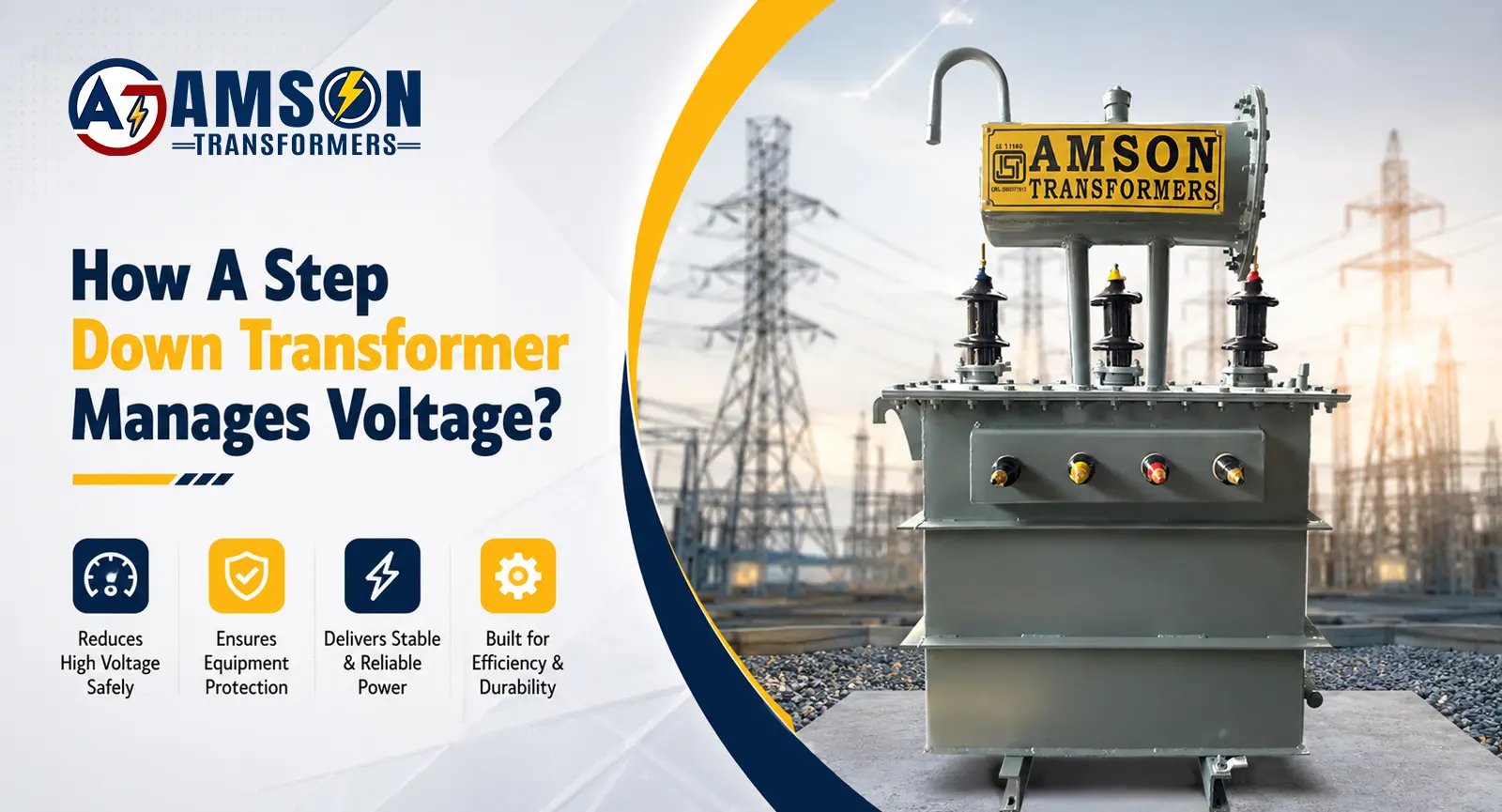
The primary protection a step down transformer provides is voltage regulation. It provides a constant and uniform output voltage to the load connected to the supply side regardless of fluctuation.
Beyond regulation, it does a few other things worth knowing:
- Switching operations naturally damp high-frequency transients as they propagate through the winding and core.
- Electrical isolation of primary and secondary windings prevents many types of conducted interference from passing through to the output side.
- The transformer recovers fast without lasting voltage deviation when suddenly the connected equipment draws more current
This is why you often find step down transformers before sensitive equipment, not just to reduce voltage but to provide cleaner, more stable power.
What a Step Down Transformer Cannot Do on Its Own?
This is worth being clear about. Transformers do not eliminate transient voltage spikes entirely. High-frequency transients from lightning or large load switching events can pass through with little attenuation. Surge protective devices must be installed right next to the transformer to protect against these.
A step down transformer also needs proper grounding, overcurrent protection, and adequate ventilation. These are part of the installation requirement, not optional additions.
Industries That Depend on Step Down Transformers
Amson Transformers supplies step down transformers across a wide range of applications, including:
- Agro industries and textile mills where motor loads create constant supply transients
- Hotels and commercial buildings with sensitive electronics and HVAC systems
- Manufacturing and mining operations where equipment downtime is costly
- Hospitals where voltage stability is directly tied to operational safety
- Electric vehicle charging stations where consistent voltage affects charging performance
- Thermal stations and power plants
Choosing the Right Step Down Transformer
A few things to confirm before specifying a unit:
- Capacity must match the connected load with a margin for peak demand
- The voltage ratio must match the incoming supply and equipment requirement
- Copper wound units are preferred where efficiency and long-term reliability matter
- The installation environment determines whether oil-cooled or dry-type is appropriate
Amson Transformers is an ISI-approved and Bureau of Indian Standards-certified manufacturer based in Mohali, Punjab. The step down transformers are manufactured with high grade copper wire winding, give 99% efficiency output, and are checked on all parameters after manufacturing before delivery. For discussion of your requirements or for a quote, please contact Amson Transformers at 0172-4117799 or Email: info@amsontransformers.co.in.
Frequently Asked Questions
Does a step down transformer completely stop voltage spikes?
No. It regulates voltage and attenuates moderate transients. For severe spikes from lightning or large switching events, surge protective devices need to be installed alongside it.
Copper wound or aluminium wound - which is better?
Copper wound gives better conductivity, higher efficiency, and longer service life. Aluminium costs less upfront. For industrial applications where reliability matters more than initial cost, copper wound is the better choice.
How do I calculate what capacity I need?
Start with total connected load in kVA, add a margin for peak demand and future expansion, and confirm input and output voltage requirements. Share those details with the manufacturer and they will confirm the right rating.
How long does a step down transformer last in industrial use?
A correctly specified and properly maintained unit typically lasts 20 to 30 years. Correct installation, grounding, protection, and regular maintenance checks are what determine that lifespan.