
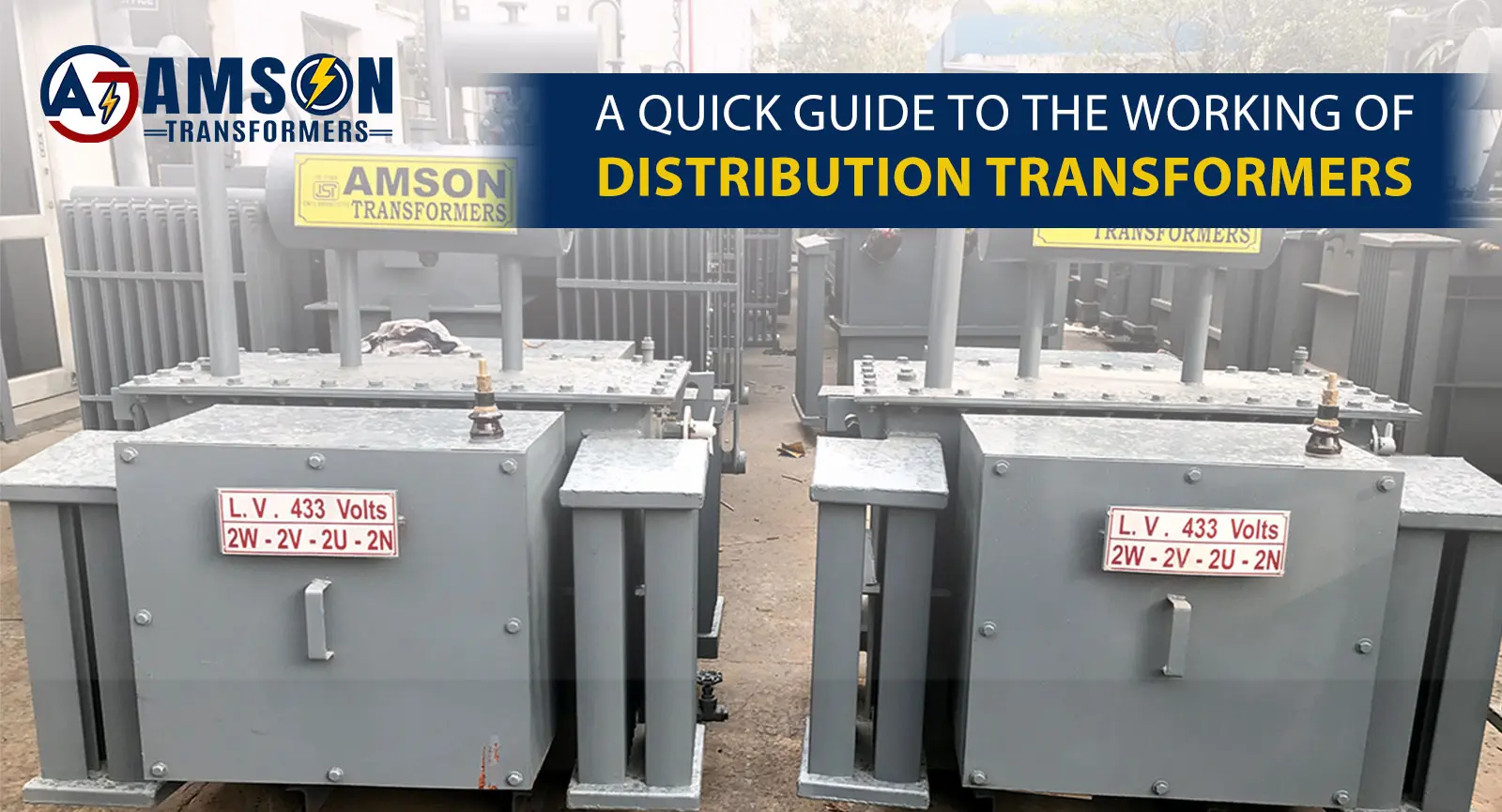
Electricity is pretty much everywhere these days, but the path it takes from a power plant to your living room is actually a huge job. Most of us just flip a switch and expect the lights to work, but there is a lot happening behind the scenes.
The real hero of this whole process is the distribution transformer. Its main job is to take the high-voltage power moving across the country and step down the voltage to a safe level that won’t damage your phone or kitchen appliances. Whether you are an engineer or just curious about how your city stays lit, it is worth knowing how these machines handle that final link in the power chain.
What is a Distribution Transformer anyway?
You can think of a distribution transformer as a vital safety filter for the electrical grid. The big power lines you see in the countryside carry thousands of volts, way too much for a normal house to handle. If that raw power hit your home directly, it would be a disaster.
This is why the distribution transformer sits at the end of the line. It acts as a middleman to lower that voltage down to a safe amount for homes and local shops. While giant transformers at power stations handle the “big” moves, these smaller units make sure the power is actually ready for you to use.
How it actually gets the job done
The way these things work is actually quite clever. A distribution transformer is engineered to precisely lower the voltage levels within power distribution networks with high efficiency and reliability. Inside that metal box, you won’t find any moving parts like gears or motors that can wear out. Instead, there are two sets of wire coils wrapped around a solid steel core.
High-voltage power enters the first coil, which creates a magnetic field. That magnetism then “jumps” over and creates a new, lower voltage in the second coil. This is a process called induction.
Most of these units are also filled with a special oil that keeps the internal parts cool and stops sparks from jumping where they shouldn’t. Since there are no moving parts to break, these machines can sit outside in the rain or sun for decades and just keep working.
Types and Shapes of Distribution Transformers
You have probably walked past a distribution transformer hundreds of times without even noticing. In older neighborhoods, they are the heavy grey cylinders hanging off wooden utility poles. In newer areas or near shopping centers, they look like green or tan metal boxes sitting on a concrete pad on the ground.
Some big factories even keep them inside to protect them from the weather. The type used just depends on how much power is needed and where the wires are buried.
Why do they even matter?
Distribution transformers do more than just reduce voltage. They keep electricity steady, prevent power spikes, and ensure that devices work safely. They help minimize energy loss and reduce the risk of damage to electrical appliances. In short, they are essential for keeping homes, offices, and industries running smoothly.
Wrapping it up
A distribution transformer is what makes the whole electrical grid actually work for the rest of us. It’s basically that last, vital step that takes raw, high-voltage power and tames it into the safe energy we use every single day.At Amson Transformers, we’ve spent more than 30 years perfecting how we build these machines. Our main focus is making sure every distribution transformer we ship out is reliable enough that builders and engineers never have to lose sleep over power failures or equipment issues.