
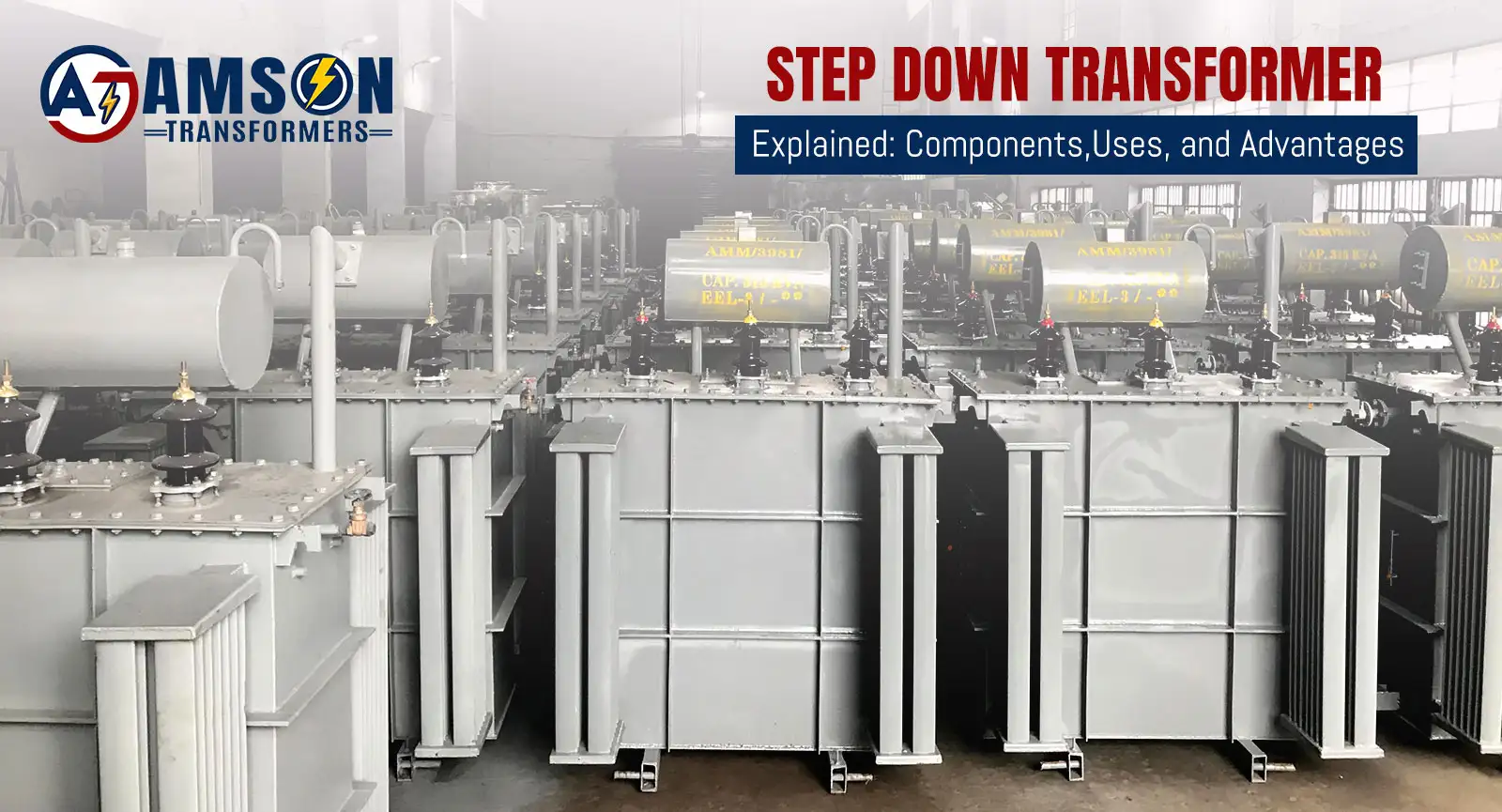
Step down transformer perform an important role in making sure that electrical systems function effectively. As the name suggests, its primary function is to change high-voltage AC power into a lower voltage output that can be safely used in homes, businesses, and industrial facilities. In simple words, it down the high voltage to low so that many electrical devices and appliances can operate on a stable, low voltage effectively.
The step down transformer contains two coils, which are:
Primary windings:
It is the coil from where electricity with high input voltage enters the transformer.
Secondary windings:
It is the coil from which decreases the output voltage and then transfers it into machines and electrical appliances.
Working of Step Down Transformer:
Transformers work upon Faraday’s law of electromagnetic induction. Faraday’s law states that electromagnetic induction is a phenomena where changing magnetic fields creates an electromotive force or voltage in an electrical circuit. As a result we can control the voltage and make it step up and down according to our requirement.
The turn ratio:
The ratio of turns measures the voltage reduction. Power conversions are determined with the help of the number of turns in primary and secondary windings. More turnings in the primary winding and fewer turnings in the secondary winding will cause reduction in output voltage and reverse voltage.
The magnetic core:
The magnetic center is an important aspect of the functioning of the transformer. It is made up of laminated iron. Its main role is to assist in the flow of magnetic flux between windings which decreases the energy loss and enhances the overall efficiency of the transformer.
Uses of Step Down Transformer:
Power Distribution Networks:
They are mainly used in electrical grids which can convert 33kV, changing high transmission voltages into smaller ones of 220V and 110V which are suitable for residential and commercial usages.
Commercial and Household Areas:
Most of the electronic components, like TVs, phone charges, and laptops, need less voltage to operate efficiently.
Preferred Industrial Machinery:
In factories, they regulate the voltage of large duty machines to protect them from damage caused by the voltages that are too-high.
Renewable Energy Systems:
They are also used in changing solar panel’s high voltage output or wind turbines to right voltages for residential and commercial properties.
Security:
This device ensures uninterrupted supply of voltages and avoids electrical surges that could damage equipment.
Advantages of Step Down Transformer:
Helps in Long-Distance Travel:
These transformers allow electricity to transport electricity through long distances without the loss of electricity.
Works Without Break:
In relation to other devices that require break, they operate all time without being stopped.
Less Power Use:
Step down transformers consume very little energy. Technology advancements have made them better at their work.
Easy to Take care of:
After installation they don’t require much care once they have been put in place. It is enough to examine the oil occasionally and then fix the damaged and rusty parts accordingly.
Conclusion:
Step down transformers are one of the important components of modern electronic systems and they lower the high voltage to perform various applications. Their efficiency, versatility make them important in industrial operations and consumer electronics. It is used for various purposes ranging from household applications, industrial uses and other applications. Step down transformers are also used in power grids to reduce very high transmission voltages in homes and businesses for devices like TVs and chargers in factories to protect heavy machines and renewable energy systems of solar panels and wind turbines to adjust voltage levels. Amson Transformers are innovative organizations approved by BIS and ISI, and ISO 9001-2015 certified engaged in the production of step-down transformers.